
Understanding Sciatica
Sciatica is a condition caused by irritation or compression of the sciatic nerve, which runs from your lower back down through your legs. It can cause sharp pain, tingling, or numbness that may affect your daily activities. Early recognition is important to prevent worsening symptoms and support faster recovery.
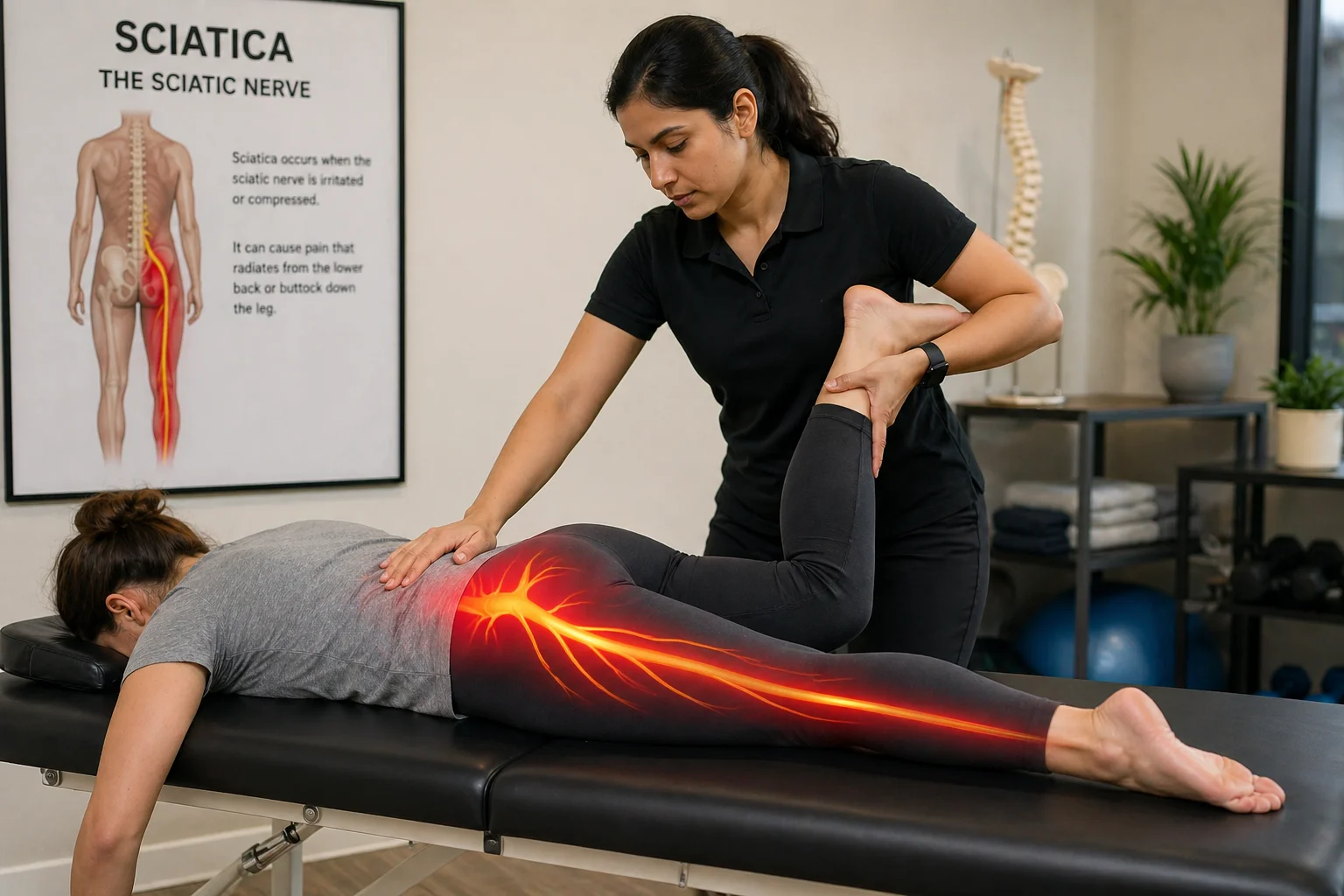
1. Pain Radiating from the Lower Back to the Leg
A common sign of sciatica is pain that starts in the lower back or buttock and travels down one leg. This pain may feel sharp and shooting, or sometimes like a dull ache. It may worsen when sitting or standing for long periods.
2. Numbness or Tingling
Many people experience tingling or “pins and needles” sensations in the leg, foot, or toes. This happens because of pressure on the sciatic nerve and may interfere with normal movement.
3. Weakness in the Leg or Foot
Sciatica can make it harder to lift your foot or leg, causing a feeling of weakness. Activities like walking, climbing stairs, or standing up may become more difficult if symptoms are left untreated.Pain Worsening with Movement
Coughing, sneezing, or sudden movements may increase the pain. Sitting for long periods often aggravates symptoms, while gentle walking or stretching may provide some relief.
Difficulty Sitting or Standing for Long Periods
People with sciatica often notice discomfort when sitting for a long time or standing in one position. Changing posture or shifting weight frequently may temporarily relieve pain.
When to Seek Professional Help
If your symptoms last for more than a week, worsen over time, or affect your ability to perform daily tasks, it is important to see a physiotherapist.
Early intervention can help:- Promote timely and complete recovery
- Reduce nerve irritation and pain
- Improve flexibility and strength
- Prevent long-term nerve irritation or complications
Managing Sciatica
Treatment may include:- Manual therapy techniques such as myofascial release, soft tissue release, spinal mobilization, nerve gliding, and hands-on therapy to reduce pain and discomfort
- Modalities such as IFC/TENS, ultrasound, laser therapy, and shockwave therapy to relieve pain, muscle spasm, and inflammation
- Targeted physiotherapy exercises to strengthen the core and back muscles
- Gentle stretching to relieve pressure on the sciatic nerve
- Posture correction and ergonomic adjustments
- Heat or cold therapy to reduce discomfort
Final Thoughts
Sciatica can start subtly but may progress if ignored. Recognizing early signs such as leg pain, tingling, or weakness allows you to take action quickly. With proper care and guided treatment, most people can manage symptoms effectively and return to normal daily activities.
FAQ
Q1: What causes sciatica?
Sciatica is usually caused by a herniated disc, spinal stenosis, or muscle tightness that compresses or irritates the sciatic nerve.
Q2: Can sciatica resolve on its own?
Mild cases may improve on their own, but persistent symptoms require proper assessment and treatment for timely recovery and to help prevent recurrence.
Q3: How can I relieve sciatica at home?
Guided stretching, regular movement, proper posture, and heat or cold therapy can help manage discomfort.
James Snow Physiotherapy & Rehabilitation Center is a dynamic multidisciplinary center in Milton Since, 2014. Our registered, Experienced physiotherapists provide affordable and best Physiotherapy, Chiropractor, Acupuncture, WSIB / MVA, Back Brace/Knee Brace, custom Orthotics, Registered Massage Therapy, Compression Stockings etc. in Milton